Source Modern Marble Surface Coffee Table for Living Room, Office, Lounge
Explore 30 listings for the modern marble surface coffee table, comparing options from suppliers in China. Buyers can evaluate customization, materials, and pricing to find the right piece for living rooms, offices, or lounges.
Key considerations
Products List




Comprehensive Sourcing Guide
Strategic Sourcing Guide for Modern Marble Surface Coffee Tables
The global demand for modern marble surface coffee tables has surged as interior designers and procurement managers seek to blend natural elegance with contemporary architectural lines. For B2B buyers, navigating this market requires a disciplined approach that distinguishes between verified product attributes and marketing generalizations. This guide synthesizes available market data to provide a framework for sourcing high-quality, modern marble coffee tables. The focus remains on technical specifications, material integrity, supply chain logistics, and rigorous supplier evaluation to ensure that procurement decisions are grounded in observable facts rather than unverified claims.
Technical Specifications and Material Composition
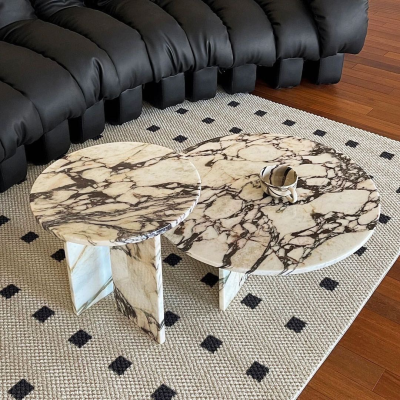
When evaluating modern marble surface coffee tables, the primary technical differentiator is the composition of the tabletop and the supporting structure. The core material for the surface is consistently identified as marble, a natural stone known for its unique veining and durability. However, the structural integrity of the table often relies on a combination of materials. In many modern designs, the marble top is paired with metal frames or legs to achieve a sleek, minimalist aesthetic. The observed product data indicates that metal is a frequent component in the base construction, providing the necessary stability for the heavy stone surface.
Dimensions are a critical specification that varies significantly based on customization. While some standard configurations exist, such as a footprint of approximately 120cm by 140cm or a compact 60cm by 48cm, the market heavily favors custom sizing. Buyers should expect to encounter models where the size is explicitly listed as "Custom Size," allowing for tailored integration into specific living room layouts. The standard height for these tables typically ranges between 75cm and 80cm, with widths varying from 80cm to 200cm depending on the specific model and intended use.
The condition of the product is invariably "New," and the style is predominantly "Modern" or "Morden," characterized by clean lines and a lack of ornate detailing. The tables are generally supplied in an "Unfolded" state, meaning they are ready for immediate placement without assembly of the main structure, though some components may require minor setup. The stability of the unit is a key performance attribute, often explicitly marketed as "Stable," which is essential for a coffee table that must support weight without tipping.
Customization Capabilities and Design Flexibility
A defining characteristic of the modern marble coffee table market is the high degree of customization available to buyers. The data confirms that customization is widely available, with options extending to the dimensions, color, and finish of the product. Buyers can often request "Customized Color" options to match specific interior design palettes, moving beyond the natural white or grey tones of standard marble. The design style is consistently described as "Modern," but the specific execution can be tailored to the client's vision.
The production process supports both "Customized" and "Non-Customized" orders, offering flexibility for bulk procurement of standard inventory or bespoke projects. For buyers requiring unique specifications, the "Custom" standard allows for specific dimensions that deviate from the typical 120cm or 140cm benchmarks. The packing methods also reflect this flexibility, ranging from "Custom" packing solutions to "Standard Export Carton+Wooden Frame" configurations. This ensures that whether a buyer is ordering a single unit or a large shipment, the packaging can be adapted to protect the fragile marble surface during transit.
Furthermore, the service model often includes ODM (Original Design Manufacturer) and OEM (Original Equipment Manufacturer) capabilities. This means suppliers can not only produce tables to a buyer's existing blueprint but also assist in developing new designs from scratch. The ability to customize the "Wood Style" or integrate solid wood elements alongside the marble and metal components adds another layer of design versatility. Buyers should verify the specific customization limits with their supplier, as the extent of modification may depend on the production capacity and the specific model number, such as CY2407291 or MCT-93.
Cost Drivers and Pricing Dynamics
The pricing of modern marble surface coffee tables is influenced by several tangible factors, including material costs, customization levels, and logistical requirements. The observed price range in the market spans from approximately $49 to $2,000 USD. This wide disparity is not arbitrary but reflects the variance in material quality, size, and complexity. Lower-priced units often correspond to smaller dimensions, standard sizes, or simpler metal frames, while higher-priced units typically feature larger custom dimensions, premium marble grades, or more intricate metalwork.
Material composition is a primary cost driver. The use of genuine marble, as opposed to engineered stone or marble-look composites, significantly impacts the base price. Additionally, the inclusion of solid wood elements or high-grade metals like stainless steel or powder-coated aluminum adds to the manufacturing cost. The "Main Material" being marble is a consistent attribute, but the grade and origin of the stone can vary, influencing the final cost.
Logistics and packaging also play a role in the total cost of ownership. The "Standard Export Carton+Wooden Frame" or "Carton/Wooden Case" options are more expensive than basic carton packaging but are necessary for protecting heavy, brittle marble surfaces. Buyers should factor in the cost of these protective measures, especially for international shipping. Furthermore, the "Production Time" and "Lead Time" can affect pricing; expedited orders with shorter lead times, such as 10 days, may incur premium charges compared to standard production cycles of 30 to 45 days.
Compliance, Certification, and Safety Standards
While specific certification status for individual products in the current dataset is marked as low-confidence or unverified, buyers must prioritize compliance and safety standards when sourcing marble furniture. The general market expectation for B2B procurement includes adherence to international safety standards for furniture stability and material safety. Although specific certifications like CE or FSC are mentioned in background data, they should not be assumed to apply to every listed product without direct verification from the supplier.
Buyers should explicitly request documentation regarding the structural integrity of the table, particularly the stability of the metal frame and the secure attachment of the marble top. The "Stable" attribute observed in product listings is a claim that requires validation through physical testing or third-party certification. In the context of modern furniture, compliance often involves checking for the absence of harmful substances in the metal coatings or adhesives used in the assembly.
For international shipments, compliance with export standards is crucial. The "Standard Export" packaging mentioned in the data suggests that suppliers are familiar with international shipping requirements, but buyers should confirm that the packaging meets the specific regulations of the destination country. Additionally, the "Warranty" of 1 year observed in some listings indicates a commitment to product quality, but the terms of this warranty should be clearly defined in the contract, covering issues such as cracking, chipping, or frame failure.
Supplier Evaluation and Production Logistics
Evaluating suppliers for modern marble coffee tables requires a focus on their location, production capacity, and logistical reliability. The primary production hubs identified in the market data are located in China, specifically in regions like Hebei, Guangdong, and Foshan. These regions are known for their manufacturing expertise in furniture and stone processing. Buyers should verify the specific origin of the product, as "Hebei, China" and "Foshan, Guangdong, China" may imply different supply chain dynamics and cost structures.
The "Lead Time" is a critical factor in procurement planning. Observed lead times range from 10 days for standard or rush orders to 30-45 days for custom production runs. The "Delivery Time" is often specified as 25-30 days after the deposit is received, indicating that the total timeline includes both production and shipping. Buyers must account for these variables when planning inventory or project timelines. The "Production Time" of 10 days suggests that some suppliers have the capacity for rapid turnaround, but this may be limited to specific models or sizes.
Payment terms are another area requiring careful negotiation. The standard term observed is a 30% deposit followed by a 70% balance, which is a common practice in international trade. Buyers should ensure that the payment schedule aligns with their cash flow and that the balance payment is contingent upon the successful completion of quality checks. The "Visit Our Factory" attribute indicates that some suppliers are open to on-site audits, which can be a valuable step in verifying production capabilities and quality control processes.
Quality Control and Long-Term Procurement Strategy
Maintaining quality in marble furniture procurement involves rigorous inspection protocols. The "Main Material" being marble necessitates checks for natural defects, such as fissures or discoloration, which are inherent to the stone but must be within acceptable limits for commercial use. The "Feature" of stability must be verified through load testing, ensuring the table can support typical living room loads without wobbling or tipping.
For long-term procurement, buyers should establish a relationship with suppliers who offer consistent quality and reliable lead times. The availability of "ODM OEM" services allows for continuous product development and adaptation to changing market trends. Buyers should also consider the "Warranty" period as a metric of supplier confidence; a 1-year warranty is a baseline, but longer terms may be negotiable for high-volume contracts.
Finally, the "Custom" nature of many orders means that quality control must be integrated into the design phase. Buyers should request pre-production samples or detailed technical drawings to ensure that the final product meets the specified dimensions and aesthetic requirements. By focusing on these tangible attributes and maintaining a disciplined approach to verification, B2B buyers can successfully source modern marble surface coffee tables that meet both functional and aesthetic standards.
FAQs
Can modern marble surface coffee tables be customized in size?
Yes, modern marble surface coffee tables are available in custom sizes to fit specific living room layouts. While standard dimensions like 120cm by 140cm exist, buyers can request tailored measurements for unique projects.
What is the typical lead time for producing these tables?
The production lead time ranges from 10 days for standard orders to 30-45 days for custom requests. Delivery typically occurs 25-30 days after the deposit is received, depending on the specific model and customization level.
Which materials are commonly used for the table structure?
The main material for the tabletop is marble, while the supporting structure often features metal frames. Some designs also incorporate solid wood elements to enhance stability and aesthetic appeal in modern settings.
How are these tables packaged for international shipping?
Packaging options include standard export cartons, wooden frames, or custom protective cases to ensure safety during transit. The specific method depends on the order size and whether the product is customized or standard.
What payment terms are standard for these orders?
The standard payment term requires a 30% deposit followed by a 70% balance payment upon completion. This structure is common for both custom and non-customized marble coffee table orders from Chinese manufacturers.
Where are these marble coffee tables primarily manufactured?
These tables are primarily manufactured in China, with key production hubs located in Hebei and Foshan, Guangdong. Buyers should verify the specific origin to understand supply chain dynamics and potential logistics costs.
What warranty is typically offered for these products?
A standard warranty of 1 year is often provided for these modern marble coffee tables. This coverage typically addresses structural issues, though specific terms regarding marble defects should be confirmed with the supplier.